

Patio Slabs and Paving in Woodford Green
A patio is the bit of the garden you actually use, so it is worth getting right. We lay porcelain, natural sandstone and concrete paving across Woodford Green, Buckhurst Hill, Chigwell and Wanstead, on a full mortar bed with the falls set properly so water runs away from the house rather than sitting in the middle of it.
New patios, replacements and extensions, quoted in writing before anything starts.
Why Choose Patio Slabs?
Installing patio slabs is one of the most popular and versatile options for outdoor flooring. Whether you’re redesigning your entire garden or upgrading an old surface, slab patios offer endless customisation and long-term value.
Benefits of Patio Slabs:
Wide Range of Styles
Choose from natural stone, concrete, porcelain and more
Low Maintenance
Simple to clean and resistant to staining
Custom Layouts
Mix sizes and patterns to suit any design aesthetic
Great for Entertaining
Ideal base for furniture, BBQs and outdoor living spaces
Strong & Weatherproof
Built to withstand UK weather year-round
Where Patios Go Wrong
Almost every failed patio we get called out to has one of three things wrong with it. Slabs bedded on five dabs of mortar instead of a full bed, so they rock and crack. No fall, or a fall running the wrong way, so water pools against the house. Or joints filled with the wrong compound, so they blow out after one winter.
None of these are visible on handover day. All three show up in the first year.
We lay on a full wet mortar bed, set the falls away from the building at the start, and use a jointing compound suited to the material. Porcelain gets a slurry primer on the back of every slab, because without it porcelain simply does not bond to mortar and the whole patio comes loose in sections.
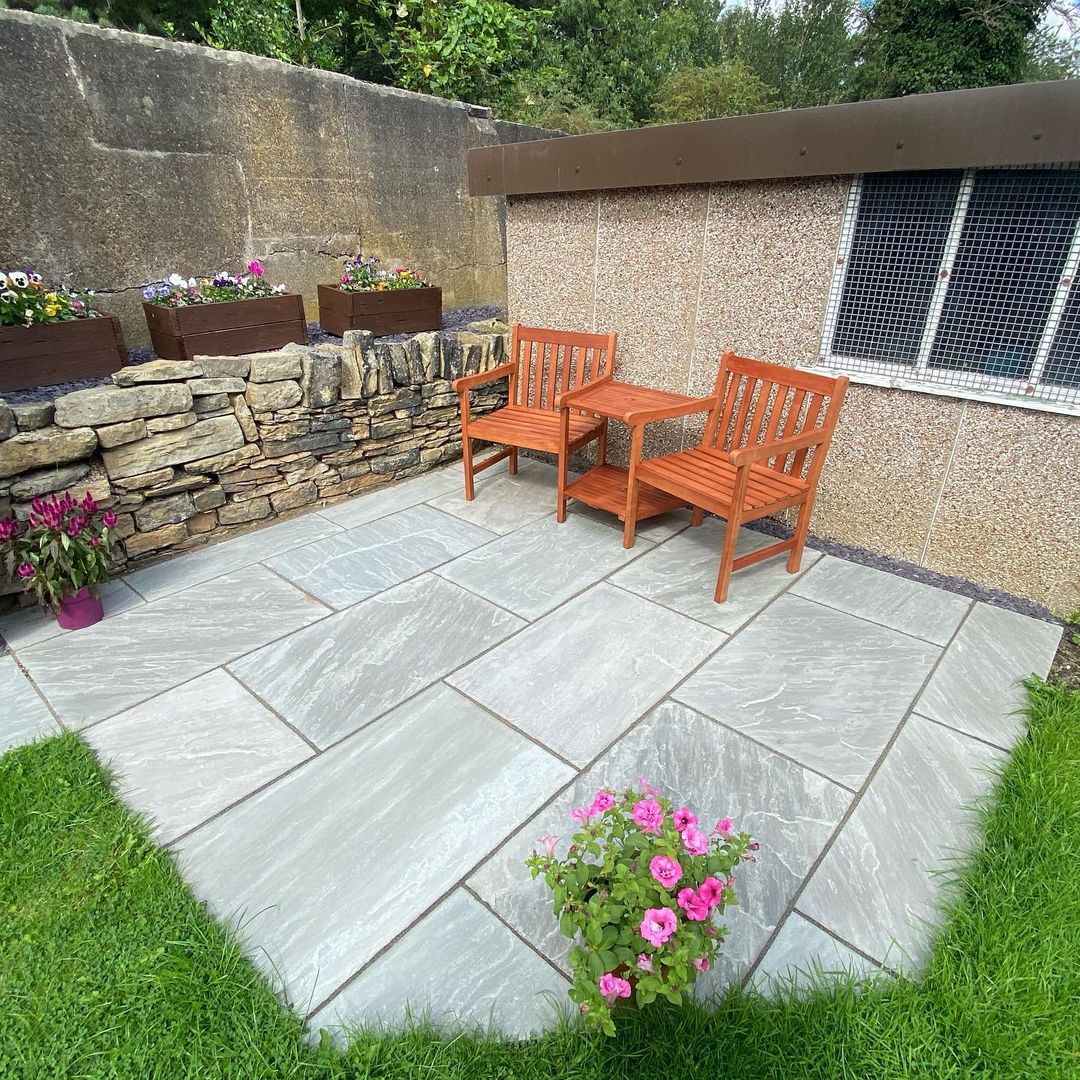
Our Patio Installation Process
1. Free site visit We measure up and look at the levels, the drainage and where the damp course sits on the house. Written quote with the costs broken down.
2. Materials Samples brought out so you can see them against your own brickwork and in your own light. Slabs look completely different wet and dry, and we will show you both.
3. Excavation and sub-base Dug out to depth, spoil removed, hardcore laid and compacted. Any drainage the ground needs gets sorted at this stage rather than afterwards.
4. Laying Full mortar bed, not five dabs, with slabs set to line and level and the falls running away from the building. Cuts made on site so edges and awkward corners actually fit.
5. Jointing and finishing Pointed with the right compound for the material, edges finished, everything washed down. Sealing where it is worth it, and we will say when it is not.
Why Patio Height Matters
The finished surface of a patio needs to sit at least 150mm, two brick courses, below the damp proof course in the wall of your house. If it comes up higher than that, rain splashing off the paving gets above the DPC and into the brickwork, and you end up with damp inside a wall that was fine before the patio went in.
It is one of the most common faults we see on patios laid by someone in a hurry, and putting it right means taking the whole thing up.
Where levels are tight, the answer is usually a drainage channel or a recessed gully along the house, not just laying it high and hoping. We work this out before we quote, not after.
Common Questions
How long does a patio take? A typical rear garden patio is four to seven days depending on size, access and whether there is anything to remove first. Raised patios and steps take longer.
Porcelain or sandstone? Porcelain is harder wearing, does not stain and stays the same colour. Sandstone is cheaper, warmer looking and weathers over time, which some people like and some do not. Porcelain costs more to lay because of the priming and the cutting.
Can you lay slabs on top of my old patio? Rarely worth it. It raises the finished level, which usually breaks the DPC rule above, and you inherit whatever was wrong underneath.
Will it go slippery? All paving gets algae in shade. Porcelain and textured stone stay grippier than smooth concrete, and an annual wash keeps any of them safe.
Can you get a digger down the side of the house? Often not, and that changes the price because the spoil has to come out by barrow. Worth mentioning your access when you ring.